
Hedge Your Bets against Harmful Pests!
Learn about Columbia Center for Urban Agriculture’s native hedgerow, why it is important for our land, and how you can start your own!
As you drive past CCUA on W Ash St, you might be wondering… is that corn in the production field? You’re close, but not quite! Depending on the season, those tall stalks are not corn, but either Rye or a competitive cover crop plant called Sorghum-Sudangrass, an important member of our summer cover crop mix, that serves an important purpose!
Here at Columbia’s Agriculture Park, Bermudagrass is one of our biggest enemies. And our cover crop mixes put up a good fight outcompeting it for sunlight and sending deep roots into the ground to break up compacted soil.
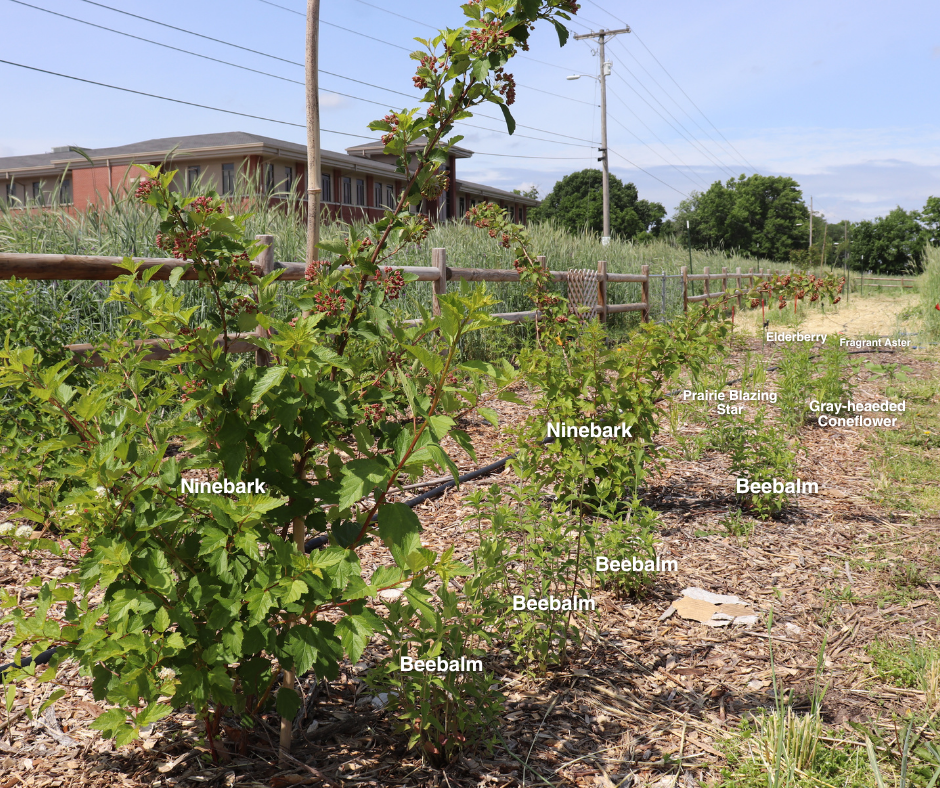
This year, we are excited to announce there is also something new in this mix… native perennials! The beginning of an exciting new project— establishing a 3,000 sq foot native hedgerow bordering our production rows!
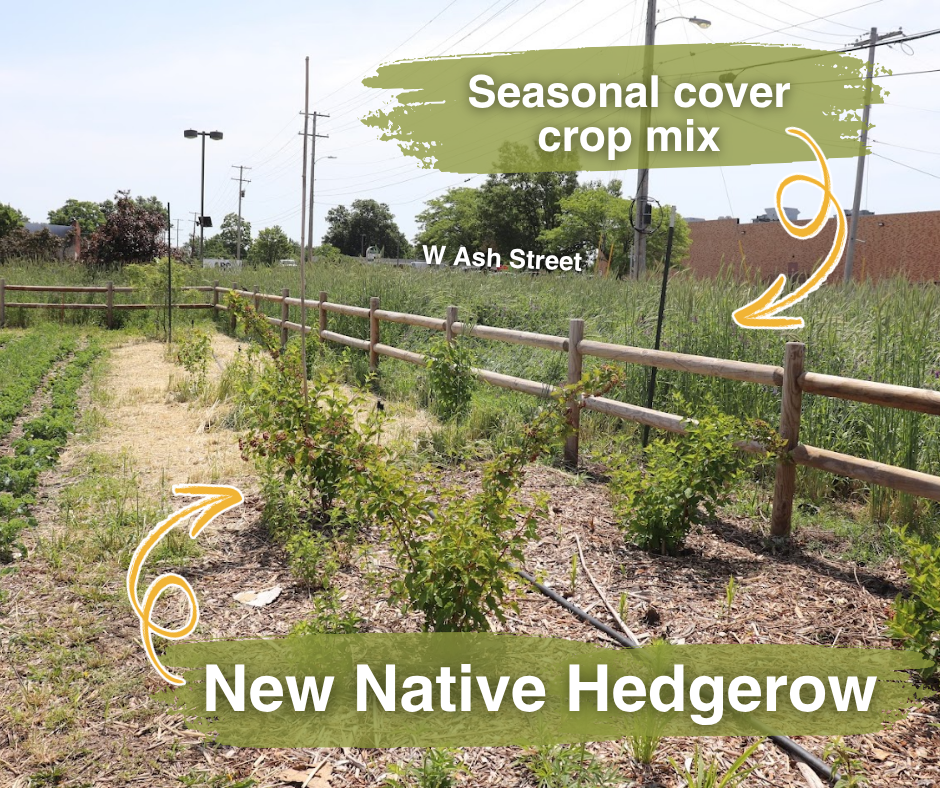
What is a Hedgerow?
A Hedgerow is a diverse mix of perennial plants that are usually in a range of heights, and bloom throughout the growing seasons. Even though a hedgerow isn’t growing food for sale or consumption, there are many benefits:
Hedgerows can block wind and act as a physical barrier against pesticidal drift and noise pollution
They act as a field marker or natural barrier
They provide both a small habitat and nectar source for beneficial insects and pollinators
Growing native plants in this new hedgerow will attract beneficial predator, parasitoid, and pollinator insects. A strip of land that is protected for habitat is crucial for many of these pollinators and beneficial insects that nest in the ground or past years old flower stalks.
Why should I care?
These special insects and pollinators allow our crops to have a higher and stronger quality yield without having to use ecologically harmful pest practices. A biodiverse population of native insects at the farm will help control influx of vegetable pests. For example:
Parasitoid wasps lay their eggs inside of destructive tomato hornworms
Lady beetles and Green Lacewing larvae feed on aphids
Many species of ground beetles will eat an array of pests, such as aphids, cutworms, slugs, and more
Native hedgerows are an important part of a farm, not only resulting in healthier and more abundant crops, but they improve the overall ecology of the land. To truly practice land stewardship it is important to not only extract from the land, but give back to it as well.
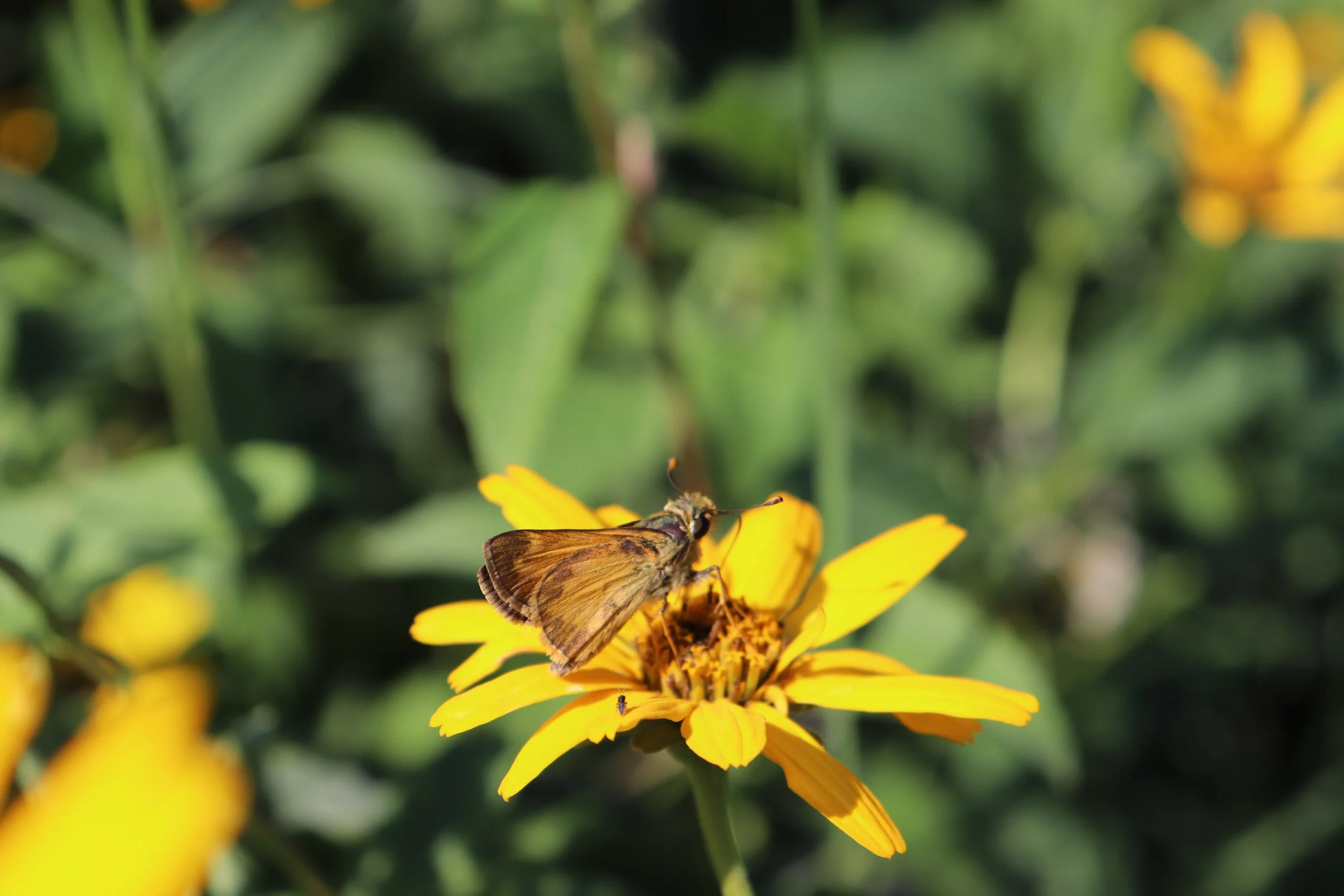
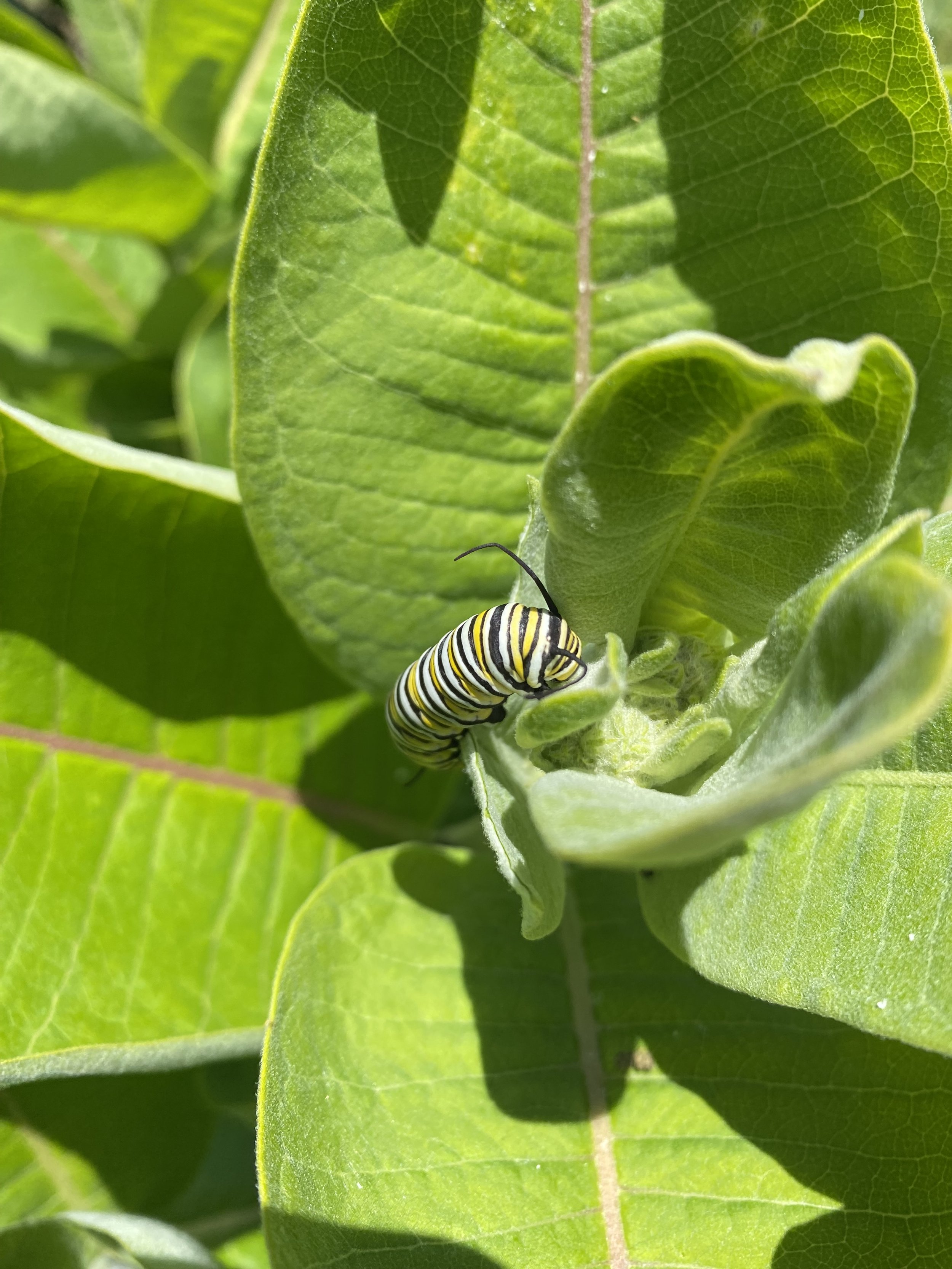

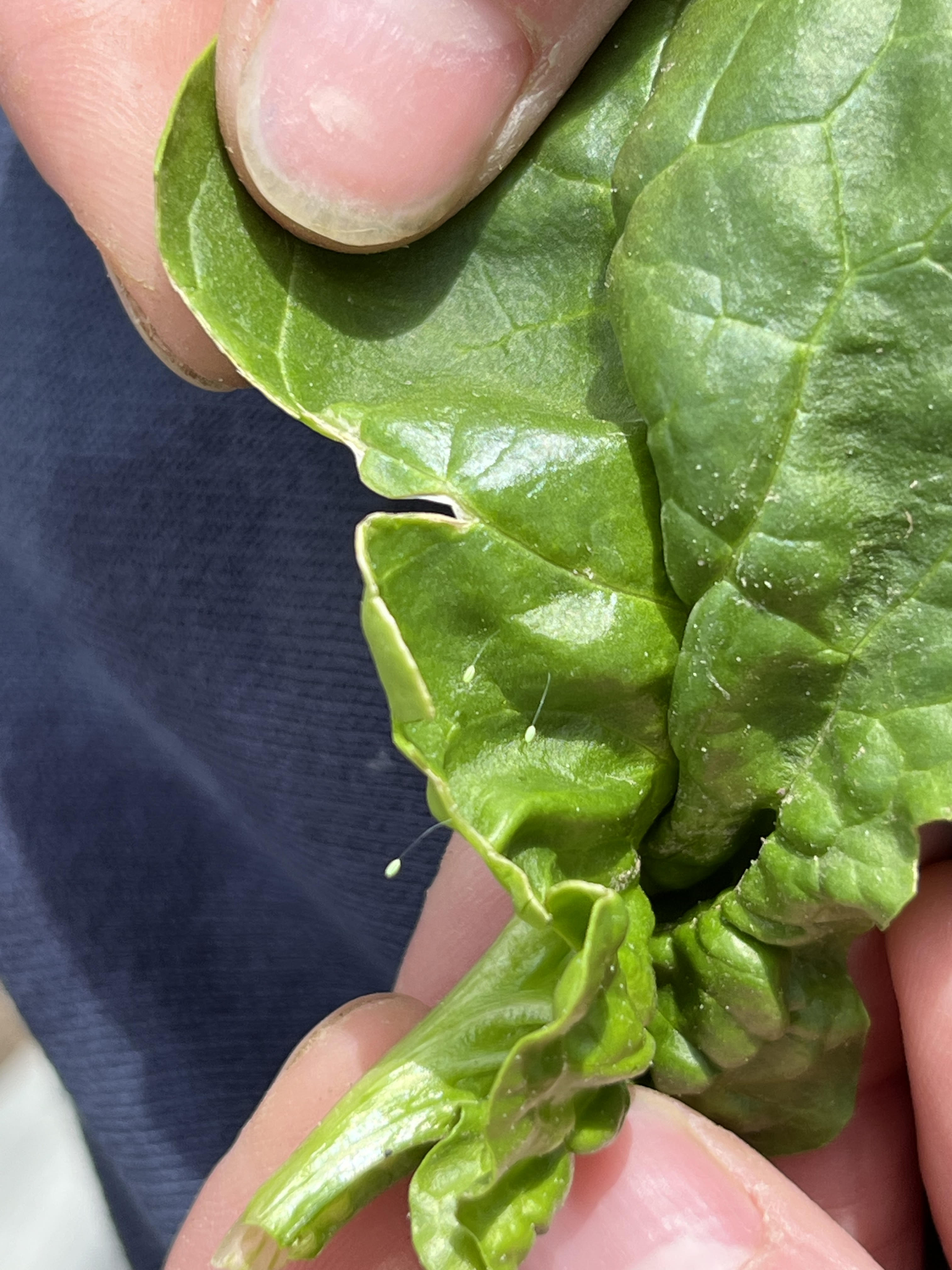
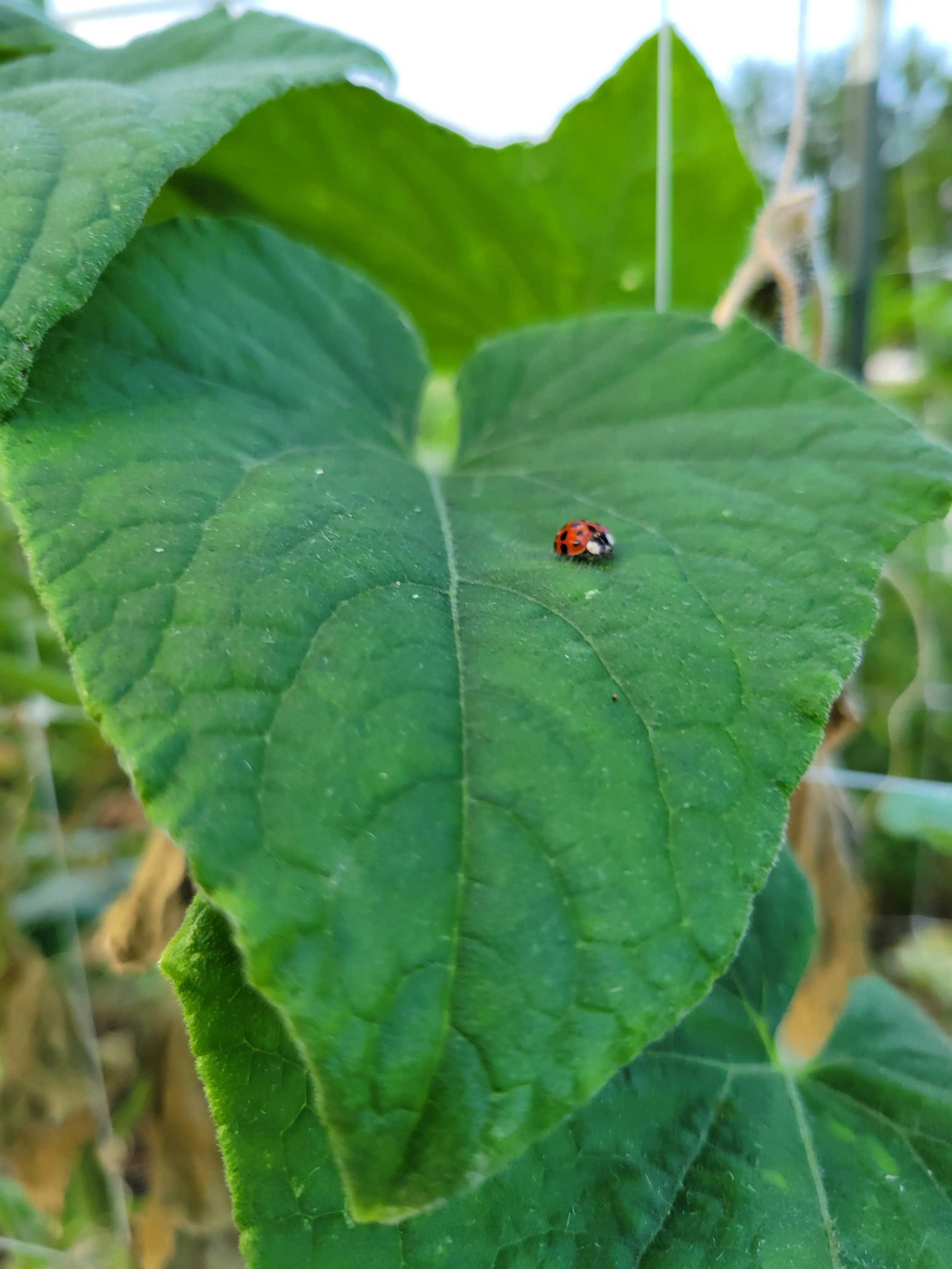
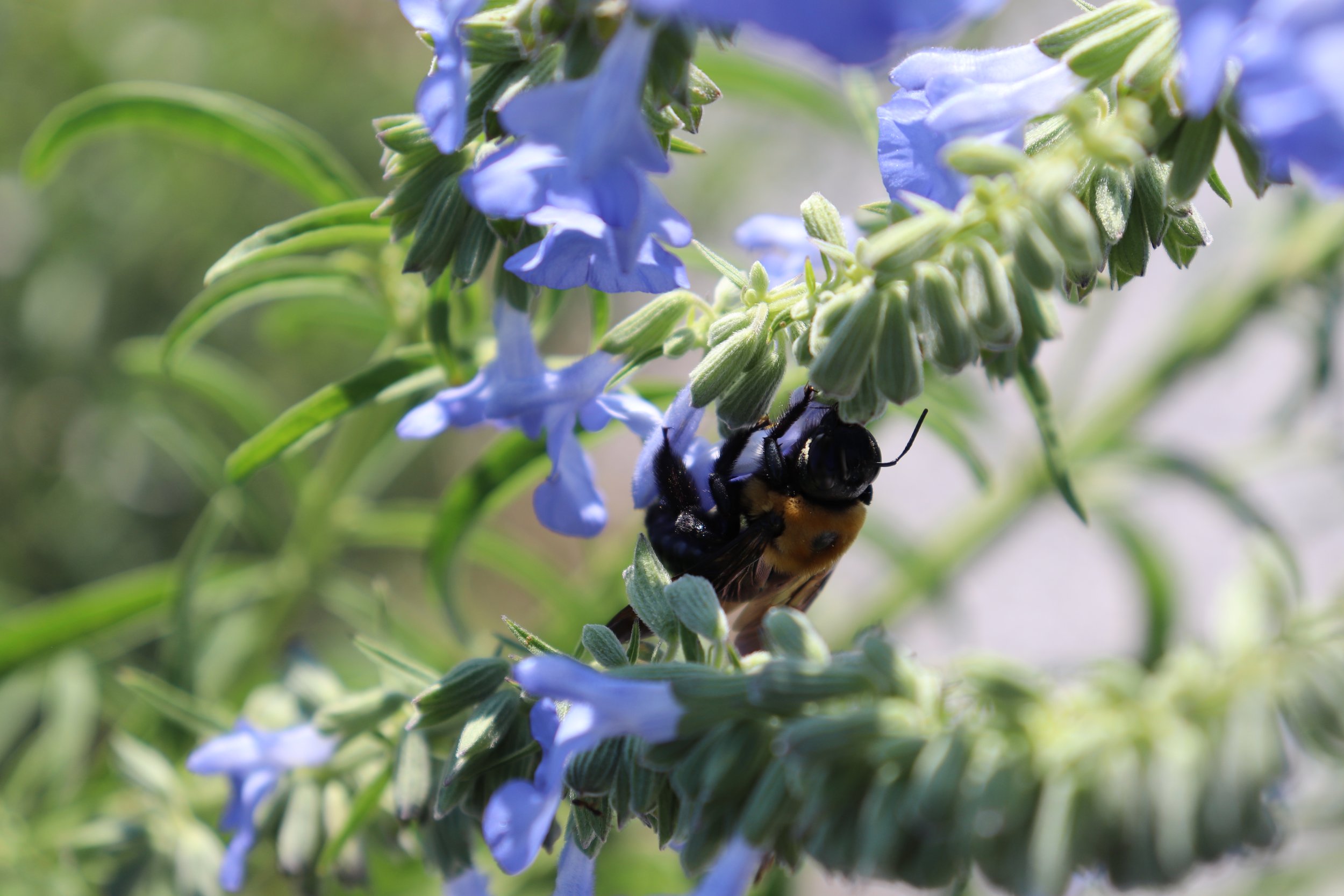
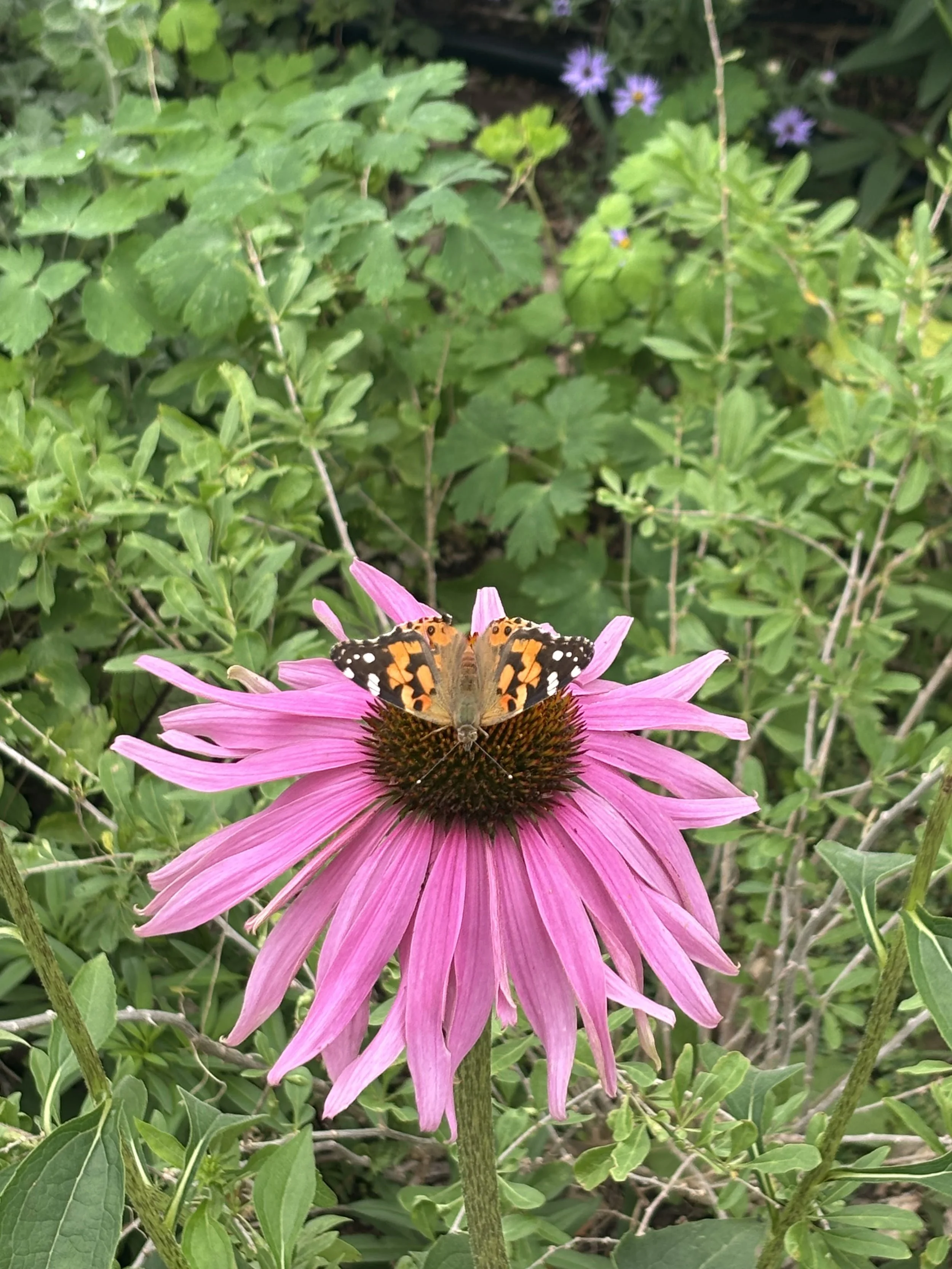
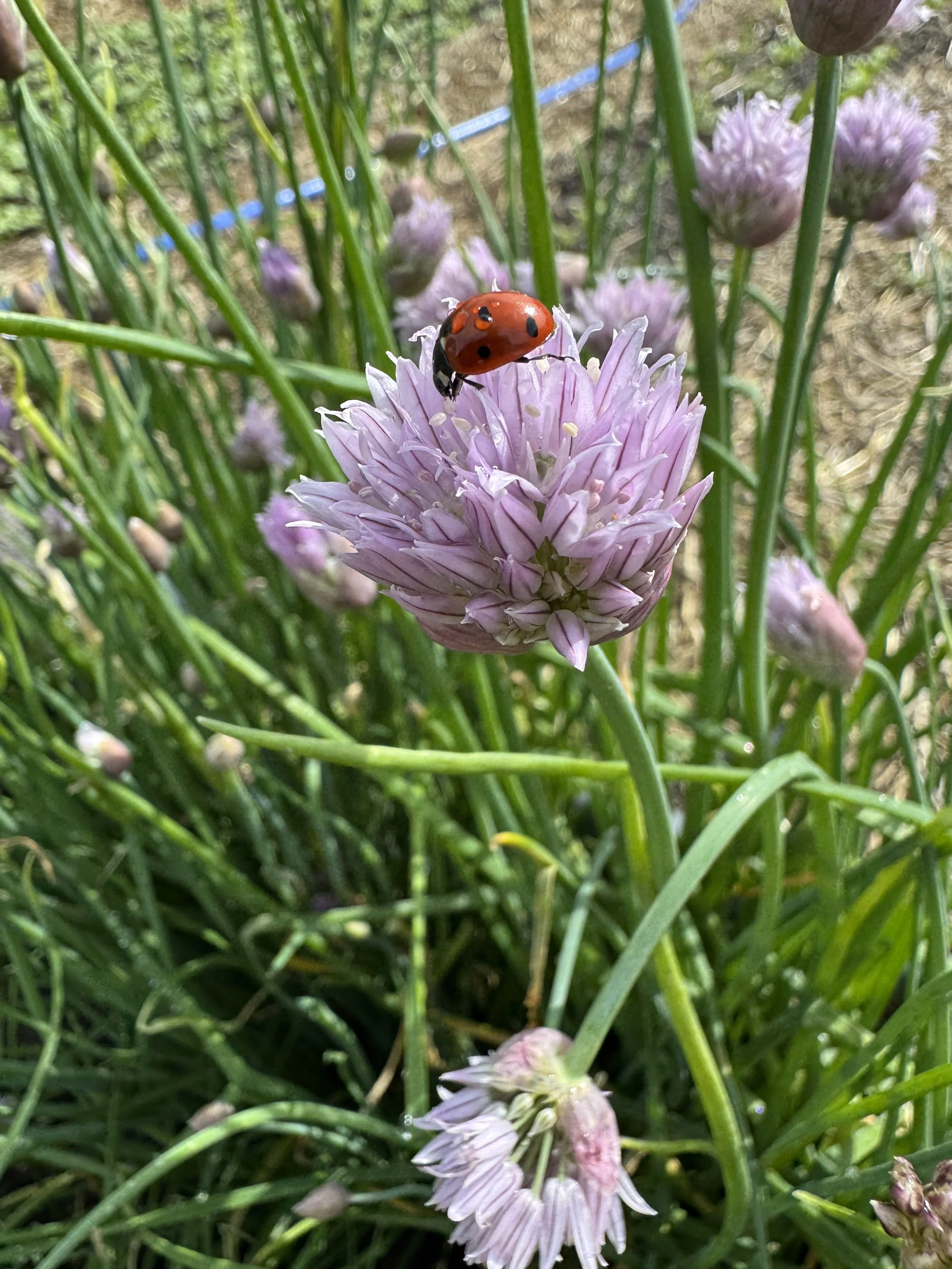
Above: Pollinators and beneficial insects that call Columbia’s Agriculture Park home as a result of planting more native trees, flowers, and shrubs.
How did we do this and how can you do it too?
Adding natives to our hedge row began by planting Missouri native trees and shrubs (and you can to!) such as:
Smooth Sumac
Ninebark
American Hazelnut
Witch-hazel
Serviceberry
Flowering Dogwood
Acquired through the organization Forest ReLeaf, establishing trees and shrubs is phase one of the entire project's installation. The rest of the space will be planted in the next several years with over 20 different native plant species! Including flowers such as:
Rattlesnake Master
Beebalm
Common Boneset
And shrubs such as:
Blackhaw viburnum
False indigo Bush
American Hazelnut
And grasses such as:
Bunch Grasses for beetle banks
Blue Stem
Curly Oat Grass
In the meantime, the extra space will be safely occupied by seasonal cover crop mixes. If you want to learn more about selecting which native trees, flowers, and shrubs are best for your home or garden space check out the following resources: Grow Native, Missouri Botanical Gardens, and Missouri Wildflowers Nursery.
Giving back to our land is an ancestral practice that indigenous people all over the world have been practicing for thousands of years. It is all of our responsibility, especially farmers, to have a reciprocal relationship with the land.
We can’t wait to continue watching it grow!